
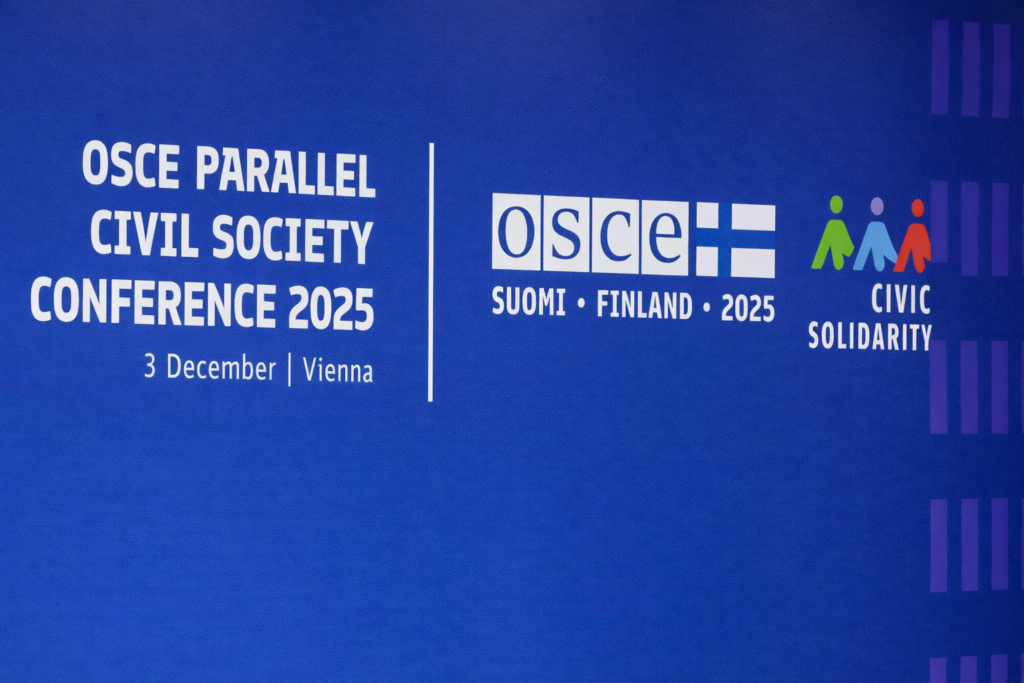
On the 3rd of December 2025, the OSCE Parallel Civil Society Conference gathered representatives from across the OSCE region to reflect on the organisation’s future and to help shape priorities for 2026. The conference reaffirmed the central role of civil society engagement in safeguarding the Helsinki Principles at a time of war, geopolitical tension, and institutional uncertainty, as can be seen in the summary from the event.
As part of the programme, Bradley Reynolds (Board Member of Historians Without Borders and Senior Researcher at the University of Turku) delivered remarks connecting the contemporary reform debate to the deeper historical roots of the Helsinki Process.
In his address, Bradley Reynolds revisits the origins of the Helsinki Process, highlighting the 1970 Helsinki Security Days as evidence that civil society activism preceded and helped generate the diplomatic negotiations that led to the Helsinki Final Act. Drawing on archival research, he argues that citizen engagement has always been central to the OSCE’s identity and that this participatory foundation must be renewed today. In the context of Russia’s ongoing war against Ukraine and growing militarisation in Europe, Reynolds calls for revitalising the “Helsinki Conscience” — a civic spirit that supports the Helsinki Principles and ensures that the OSCE remains not only a forum for state diplomacy, but a platform for active citizen involvement in comprehensive security.